Hello, this is Chariot Lab. This time, I'll be writing an article about balcony solar power generation. Although I'm talking about balcony solar power generation, the system I'm introducing is not grid-connected and does not use batteries. There have not been many reported examples of such systems in practical use.
First, there are two common types of solar power generation systems: grid-connected systems and stand-alone systems.
Grid-connected systems are systems that purchase electricity from the grid if the amount of electricity generated is insufficient, and sell it to the grid if the amount of electricity generated exceeds the amount consumed. When these systems first came on the market, they were not cost-effective, but the government system forced users to make a profit.
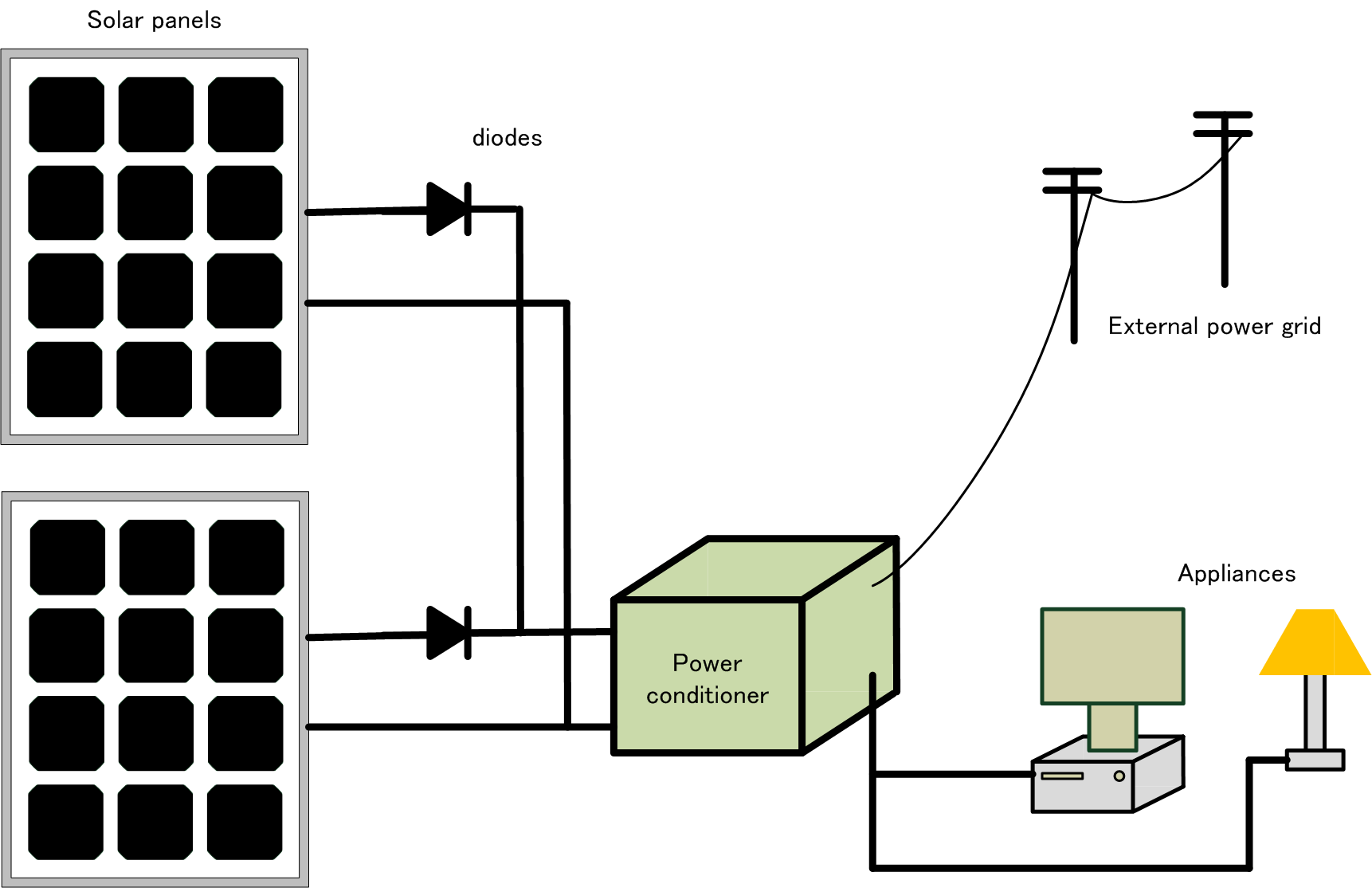
However, recently, solar power generation systems have become cheaper and the unit price of electricity has risen, making it easy to recoup the costs even without government subsidies.
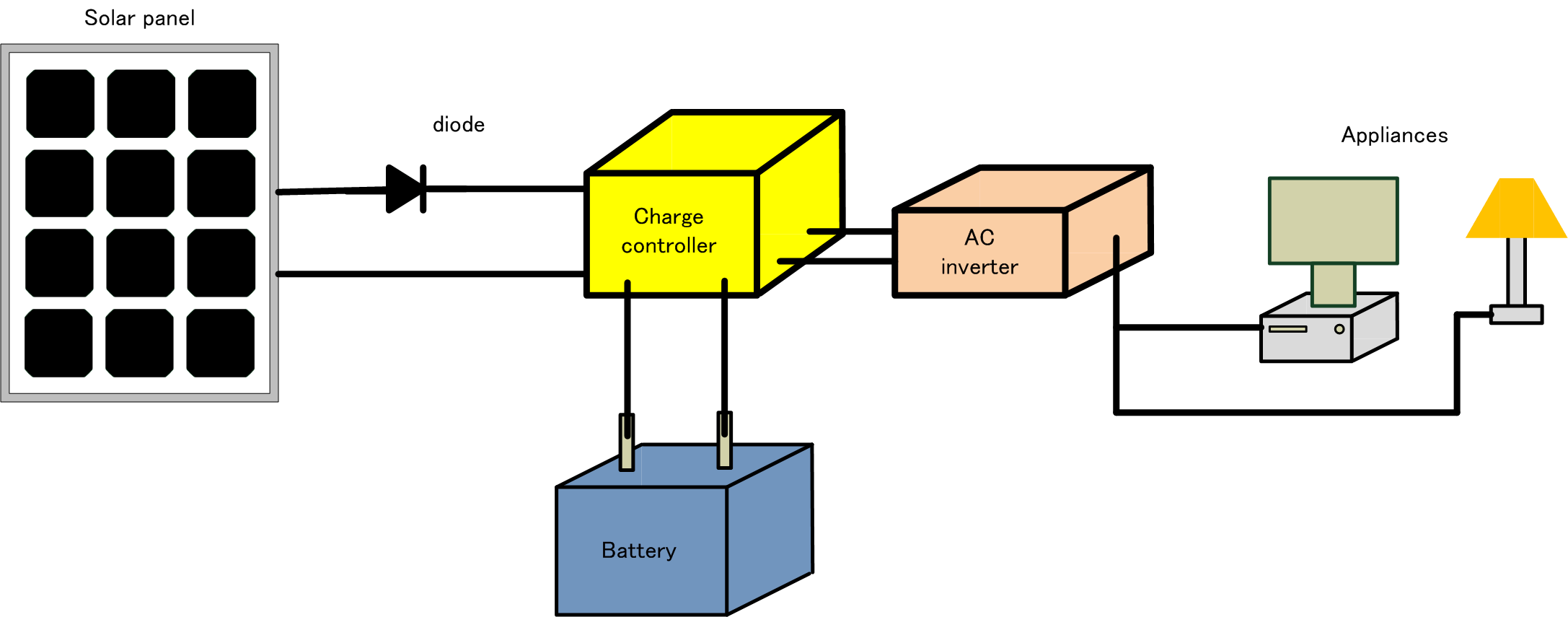
An independent power system consumes electricity stored in a battery when the amount of electricity generated is insufficient, and stores electricity in the battery when the amount of electricity generated exceeds the amount consumed. This system is not connected to the power grid, so it cannot sell electricity.Also, once the electricity stored in the battery runs out, no more electricity can be used, and once the battery is full (fully charged), no more electricity can be stored.
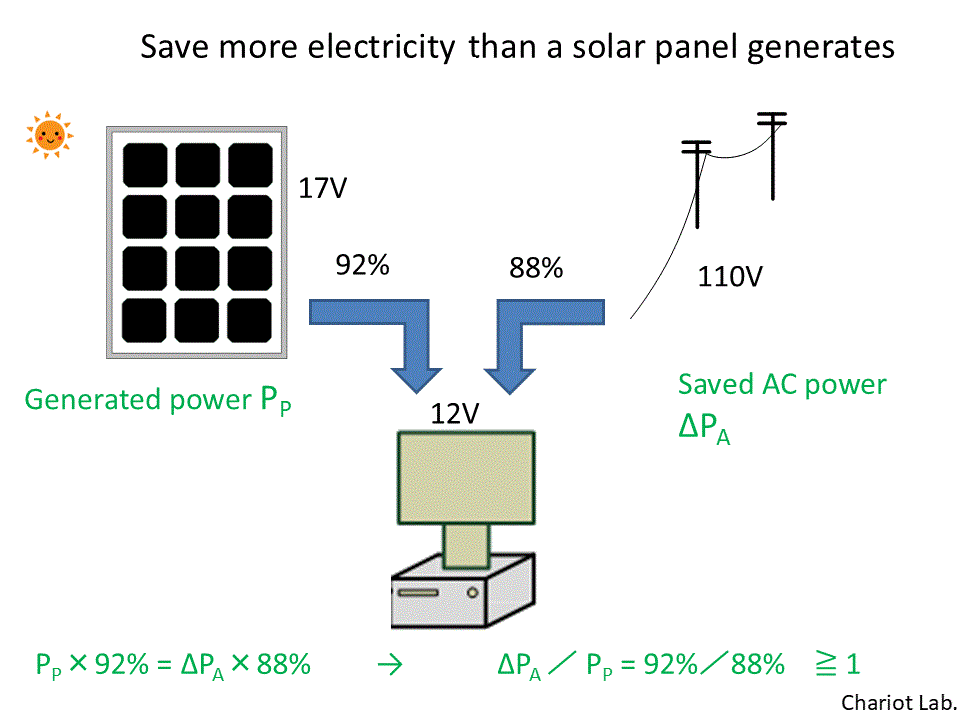
Independent power systems using balcony generators have lower installation costs than grid-connected systems installed on the roof, but the amount of power generated is low, and the amount of power generated per unit of installation cost is also low. In other words, they are often not cost-effective. Chariot Lab. has recently installed a battery-less balcony solar power generation system that only supplies power to a PC (personal computer). PCs use low-voltage DC such as 12V or 5V. In the system installed this time, the power generated by the solar panels is not converted to 100V AC, but is instead directly converted to 12V or 5V internally for power supply. This system is connected to the power grid, but does not sell power to the power grid. This method was developed and patented by Chariot Lab. and is called Chariot SACS.
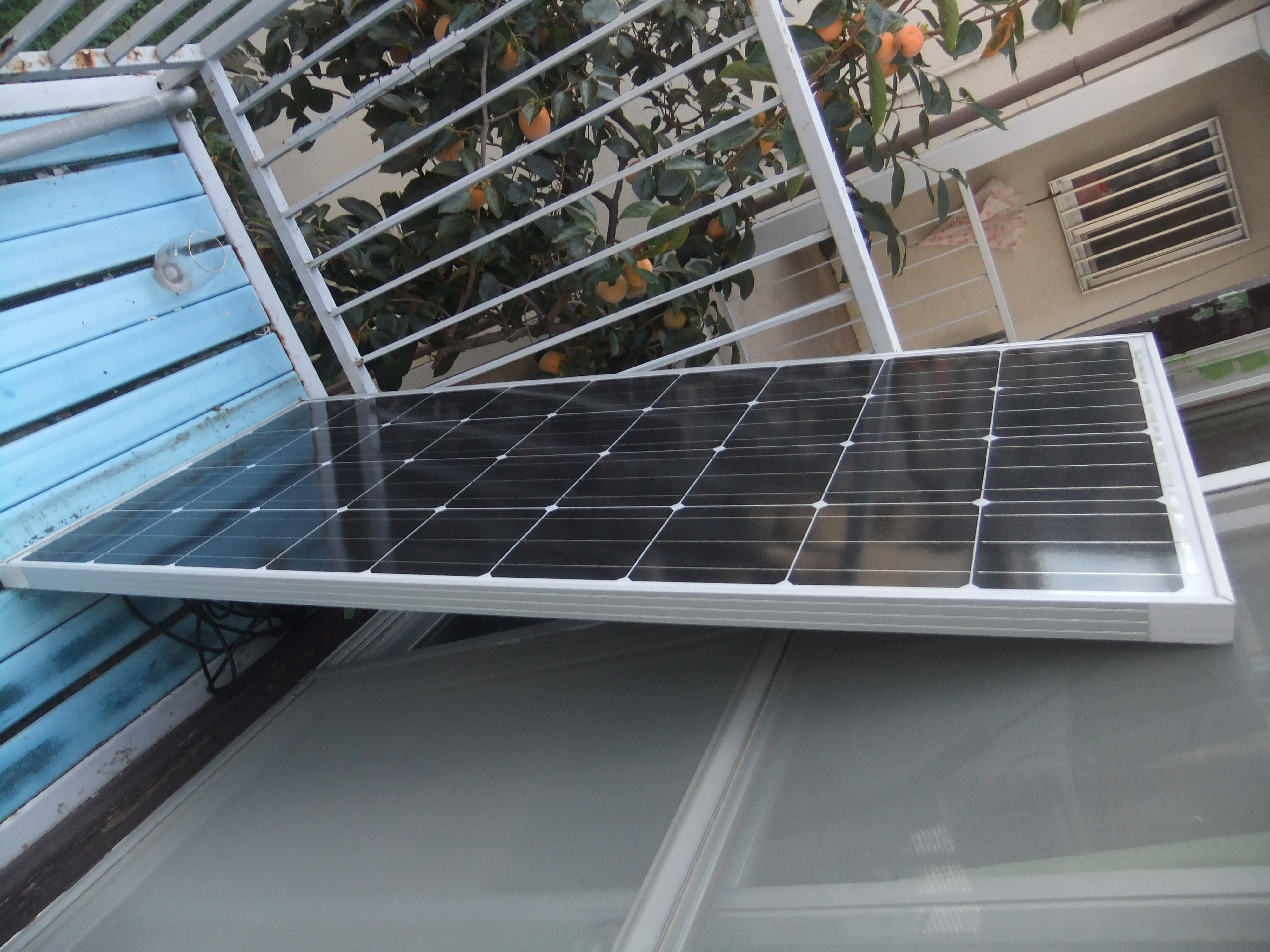
When I first moved into my house, there was a vacant lot in front of it, so it got a lot of sunlight, but now an apartment building has been built directly across the street, so it only gets sunlight in the mornings. In October, it generates most of its electricity between 9:00 and 11:00 AM. I have a 160W monocrystalline solar cell leaned against the balcony wall. It's not fixed in place or mounted on a stand. I connected a solar cell cable to the solar cell and then to Amon wiring, which you can buy in the car accessories section of a home improvement store. Although I don't recommend it, I forced the wiring through the gap in the window I open when I go to the balcony. Locking the window is a bit of a pain, but it does work. If you have access to the air conditioner duct hole, I recommend using it.
I connect the solar cell to the Chariot SACS board through wiring. The Chariot SACS board converts the power from the solar cell to 12V and 5V, and combines it with the 12V and 5V converted from the 100V AC power grid by the PC power supply. Here, at night when the solar panels are not generating electricity, the system only uses power from the grid. When the solar panels are generating electricity, it prioritizes power from the solar panels depending on the amount of power generated, thereby reducing power consumption from the grid. This control is done automatically by the Chariot SACS board using feedback control. Therefore, there is no need for humans to switch wiring even if the solar panels start or stop generating electricity. Also, in the unlikely event that the wiring from the solar panels to the Chariot SACS board is cut, the system will quickly switch to using only power from the grid, so the PC will not shut down.
The PC I am using has a Core i5-13500 CPU, 128GB of memory, no dedicated graphics card, one M2 SSD (2TB), one SATA SSD (2TB), and two HDDs (12TB). With these specifications, power consumption when idle is around 46W. When the CPU is under load, it consumes around 100W to 150W.
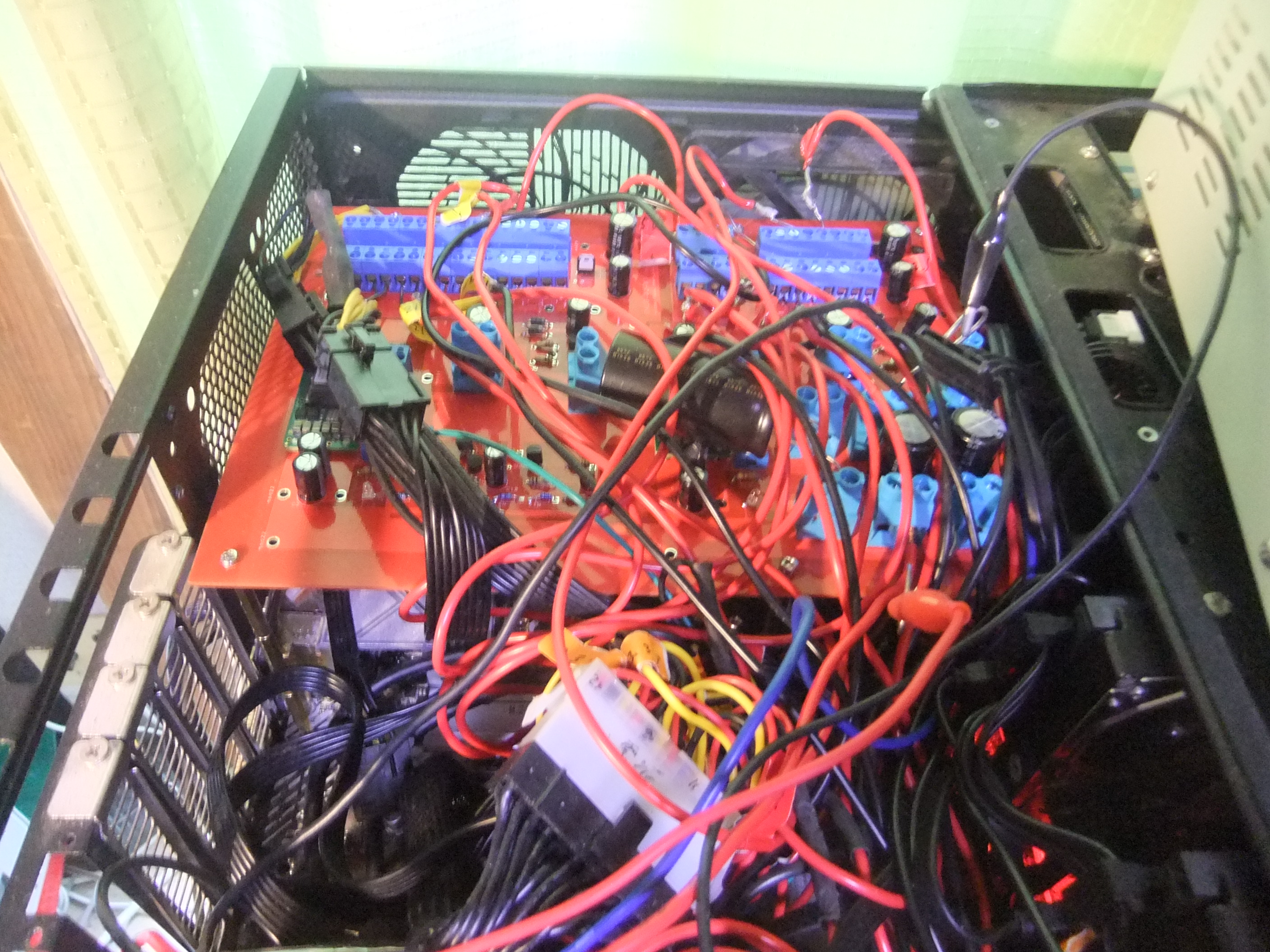
Of the 46W of power consumption of this PC when idle, about 36W is consumed at 12V and 5V. If the solar panel's power generation is below 36W, all of it is consumed, and unfortunately, if it exceeds that level, it is not used effectively. When the PC is under load, any power generated beyond that is also used effectively.With another apartment building right next door, about 100Wh of power is used effectively per day. This amounts to about 4 yen in electricity bills. If you live in an area with more sunlight, you will likely be able to save even more. The installation cost of this system is about 100,000 yen, and we are proud to say that it is far more power efficient and cost-effective than conventional independent power systems.
In addition, Chariot SACS can sometimes save more power from household power consumption than it generates. For technical details, please see the Chariot SACS technology introduction page. We look forward to your continued support of Chariot Lab.